
Ghana is an ideal host for the International Conference on Culture and Development in Africa, combining cultural leadership, political stability, world-class conference infrastructure. Situated on the western coast of Africa, the country also has warm hospitable people, and unique tourist attractions. Ghana’s enduring commitment to Pan-Africanism and diaspora engagement is well acknowledged since the country’s independence in 1957 with preference as residence for Pan-African heavyweights like W. E. B. Du Bois and George Padmore. Recent commitments which are highlighted by initiatives like the Year of Return, makes Ghana a trusted and welcoming meeting place for African and global stakeholders to advance culture-driven development and transformative change.
Ghana occupies “the earth’s center”, as the mainland to the Null Island (0° latitude and 0° longitude), where the Equator and Prime Meridian intersect in the Gulf of Guinea. This unique location reinforces Ghana’s identity as a natural crossroads of the world and a gateway between Africa and the global community.
By selecting the country to host the Secretariat of the African Continental Free Trade Area (AfCFTA), the AU affirms Ghana’s position as a leading hub for Africa’s economic integration. The AfCFTA, enables the AU to create a single African market for goods and services, supported by the free movement of people across the continent.
Welcome to adventure, welcome home…a land to love, a journey to remember.
WEB Du Bois
W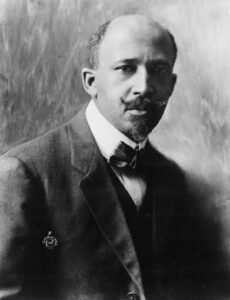 .E.B. Du Bois (1868–1963) was a pioneering sociologist, historian, author, and civil rights activist renowned as a leading 20th-century Pan-Africanist. The projects of W. E. B. Du Bois constituted a broad and interconnected effort to unite people of African descent in the struggle against racism and colonialism. Through the organization of key gatherings such as the First Pan-African Congress and the Fifth Pan-African Congress, he fostered global solidarity and influenced future leaders like Kwame Nkrumah and Jomo Kenyatta. His activism extended to the co-founding of pan African movements since the first decade of the 20th century by which he connected global Black struggles. Through his influential books such as The Souls of Black Folk and The World and Africa, as well as the Encyclopedia Africana, Du Bois advanced African-centered scholarship and challenged Eurocentric narratives.
The Pan-Africanist vision of W. E. B. Du Bois found concrete expression in Ghana, particularly through the leadership of Kwame Nkrumah, whose ideas were shaped by the Fifth Pan-African Congress. Following independence in 1957, Ghana has become a hub for Pan-African activity, hosting global Black leaders and advancing the cause of African unity. Du Bois’s relocation to Ghana in 1961 symbolized the reconnection between Africa and its diaspora, while his project on the Encyclopedia Africana supported efforts to promote African-centered knowledge. His influence also shaped Ghana’s foreign policy, as champion for liberation movements in Africa and the formation of the Organisation of African Unity. Overall, Ghana became a key site where Du Bois’s Pan-African ideals were transformed into practical political, intellectual, and cultural realities. His creation of transnational intellectual networks, helped transform Pan-Africanism into a global movement that significantly shaped civil rights struggles and African decolonization
George Padmore
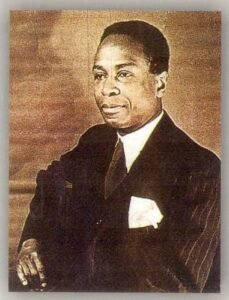 George Padmore (1903 – 1959) was a prominent Trinidadian Pan-Africanist, journalist, and author. He was a leading Pan-African thinker and activist whose work focused on mobilising Africans and people of African descent against colonialism and racial injustice. One of his key contributions was the formation of organisations such as the International African Service Bureau and the Pan-African Federation. These groups provided platforms for political activism, allowing Africans in the diaspora to organise, raise awareness about colonial oppression, and advocate for self-determination.
A major highlight of Padmore’s Pan-African projects was his role in organising the 1945 Manchester Pan-African Congress. This landmark event brought together African and Caribbean leaders to demand independence, equality, and an end to colonial rule. The resolutions adopted at the congress played a significant role in inspiring and guiding liberation movements across Africa, making it a turning point in the decolonisation process.
Padmore was also an influential intellectual whose writings exposed the realities of colonial exploitation and linked Pan-Africanism with broader anti-imperialist and socialist ideas. His work provided a strong ideological foundation for African nationalism and independence struggles. George Padmore had a great relationship with through which he influenced policies and ideas that promoted African unity and self-governance. He moved to Ghana in 1957 and served as the official advisor on African Affairs to Ghana’s first president, Kwame Nkrumah, helping shape African liberation and unification policies until his death in 1959.
Overall, Padmore’s Pan-African projects combined organisation, advocacy, and intellectual work, making him a central figure in transforming Pan-Africanism into a practical movement that contributed significantly to African independence and unity.